Blog · Investing · 19 November 2026 · 2 min read
day-trader-skill: the three checks I run before I trust a free AI trading tool
day-trader-skill is a free pack of 11 Claude skills for day trading with over 8,700 GitHub stars. Here's what it does, and the three checks I run before I'd let any AI tool trade for me.
The short answer
day-trader-skill is a free pack of 11 Claude skills on GitHub: five find trades and six take them, and nothing places an order without your yes. It had 8,783 stars on 19 November 2026, a month after it went up. Free doesn't mean safe. Before I'd let any AI trading tool trade for me, I check three things: the real trades, what the strategy really is, and a proper backtest that counts the cost of every trade.
A free pack of Claude trading skills has been going round this week. One TikTok about it got about 567,000 views.
It's called day-trader-skill. I had a look.
What is day-trader-skill?
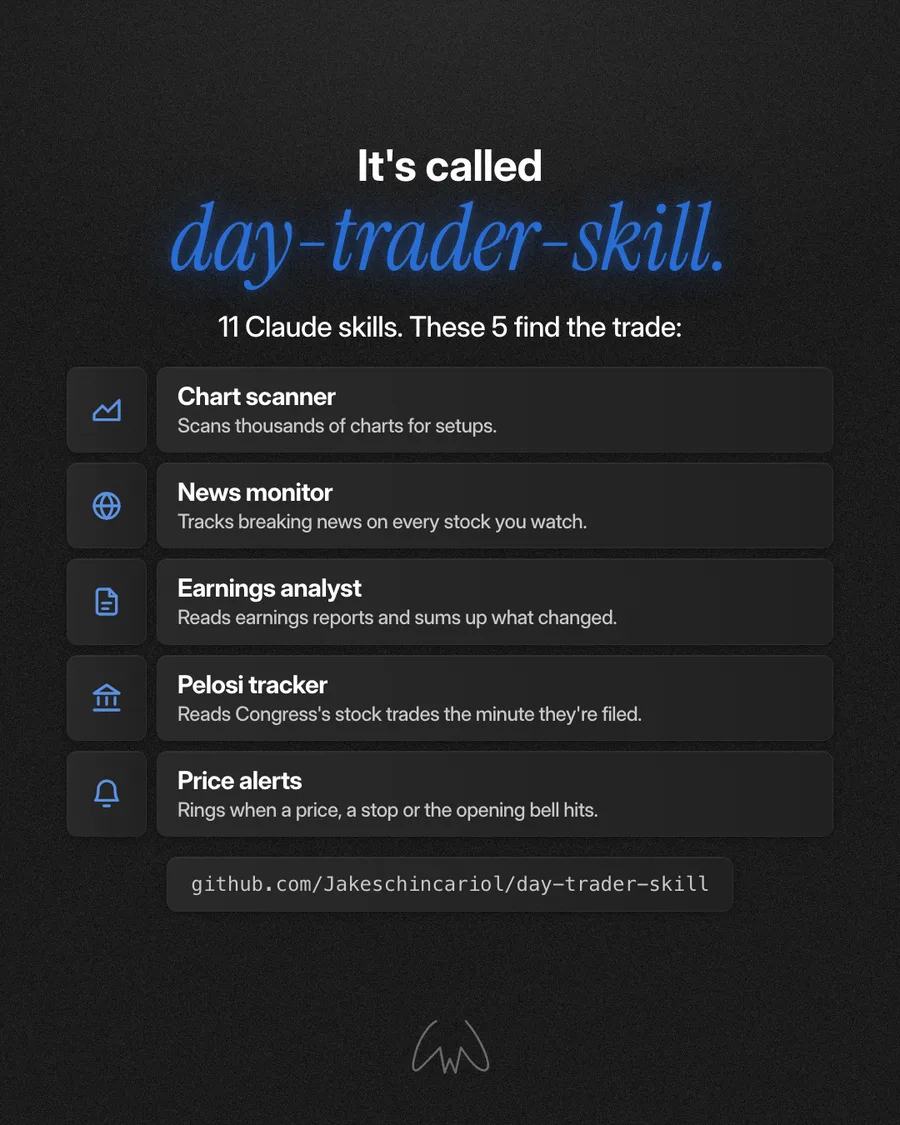
It's a set of 11 skills for Claude, free on GitHub under an MIT licence. Five of them find the trade:
- Chart scanner scans thousands of charts for setups.
- News monitor tracks breaking news on every stock you watch.
- Earnings analyst reads earnings reports and sums up what changed.
- Pelosi tracker reads Congress's stock trades the minute they're filed.
- Price alerts ring when a price, a stop or the opening bell hits.
And six take it:
- Entry timer watches a setup bar by bar and tells you when to get in.
- Exit planner sets your stop and your target before you enter.
- Time machine replays the trade 10,000 times before you risk a dollar.
- Budget manager sizes each trade to your max loss.
- Risk manager checks every trade against your limits.
- Order executor sends the orders you approve to your broker.
Nothing places an order without your yes. That's a good start.
Is a free AI trading tool safe to use?
Free doesn't mean safe. Before I'd let any AI tool trade for me, I run three checks.
Check 1: the real trades
Is there a wallet or a broker statement that shows what it actually did? Some tools come with a wallet you can look up, so you can see every trade for yourself. Screenshots don't count.
Check 2: what the strategy really is
Then I run the trades through my reverse-engineering skill. It goes through every trade and works out what the strategy is: what it buys, when, and why. That tells me whether the tool does what it says it does.
For Polymarket bots, my Bot X-Ray prompt does this from a bot's public trades.
Check 3: a proper backtest
I check they've done at least the basic backtests, the same ones I run on my own strategies. Did they test for overfitting? That's a strategy fitted so closely to the past that it falls apart on new data.
And did they count the cost of every trade? It sounds basic. Where you trade decides what each trade costs, and the costs can eat the profit you saw in the test.
Here's how much it matters. I tested the opening range breakout on Nasdaq prices. At 0.7 points of cost a trade, it made 243 times its risk. At 2.5 points, the same trades made 97 times.
| Cost per trade | Result, in times the risk |
|---|---|
| 0.7 points | 243 |
| 2.5 points | 97 |
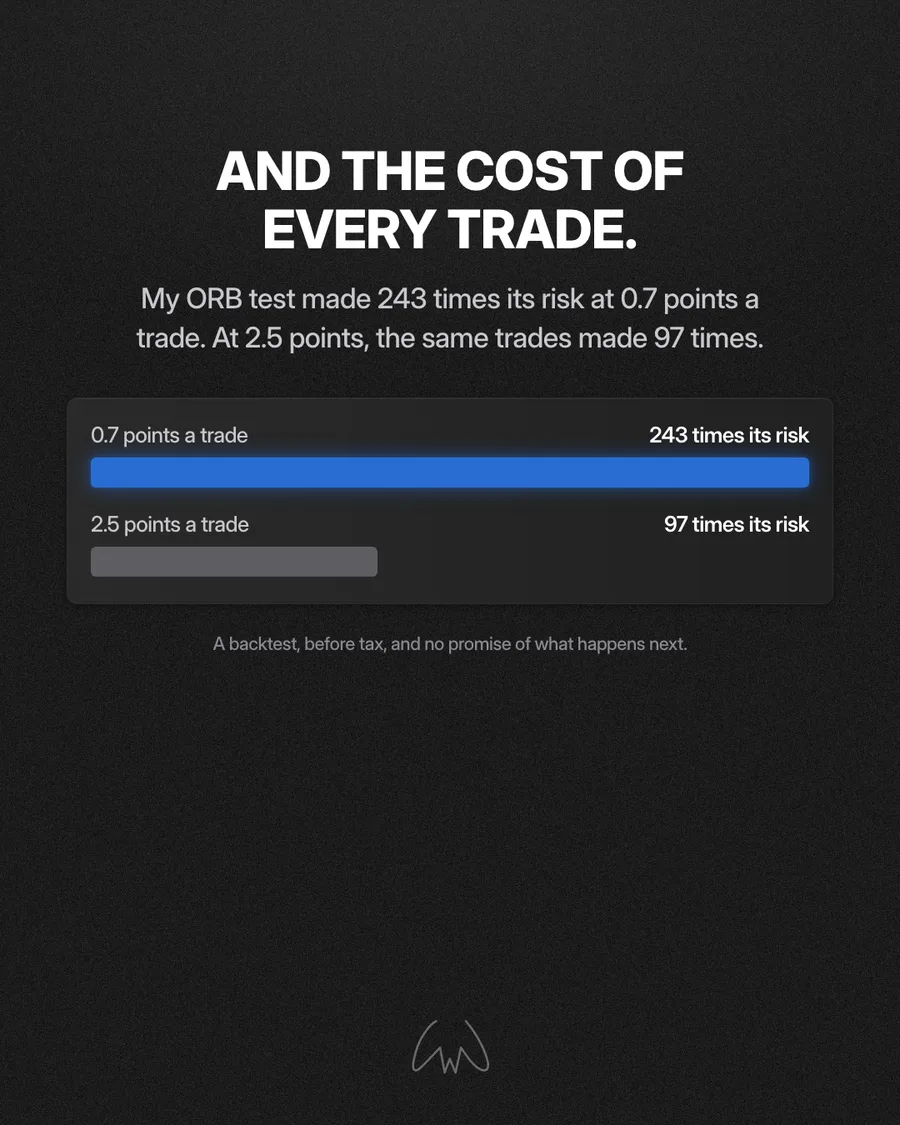
Same strategy, same trades. The cost alone took more than half of it away.
Should you use day-trader-skill?
Run the three checks on anything it finds first. If something passes, connect your own broker key, start at the smallest size with hard limits, and let your AI trade it for you.
Questions people ask
Is day-trader-skill free?
Yes. It's on GitHub under an MIT licence.
Does day-trader-skill place real trades?
Its order executor sends the orders you approve to your broker. Nothing goes through without your yes.
What's the biggest mistake in a trading backtest?
Leaving out costs. In my opening range breakout test, raising the cost from 0.7 to 2.5 points a trade cut the result from 243 times the risk to 97 times.
How do I check an AI trading tool is real?
Ask for the real trades, a wallet or a broker statement rather than screenshots. Then check what the strategy actually does, and whether the backtest covers overfitting and costs.
Where the numbers come from
- day-trader-skill on GitHub (Jakeschincariol/day-trader-skill): 8,783 stars on 19 November 2026, created 20 October 2026, MIT licence. The skill list is from its own description.
- The TikTok: @ai.amirtech, about 567,000 views, posted 16 November 2026.
- The cost test: my opening range breakout backtest on Nasdaq prices. A backtest, before tax, and no promise of what happens next.